Photo by Tima Miroshnichenko on Pexels.com
Photo by Tima Miroshnichenko on Pexels.com
What My Eating Disorder Treatment Taught Me About Making Friends
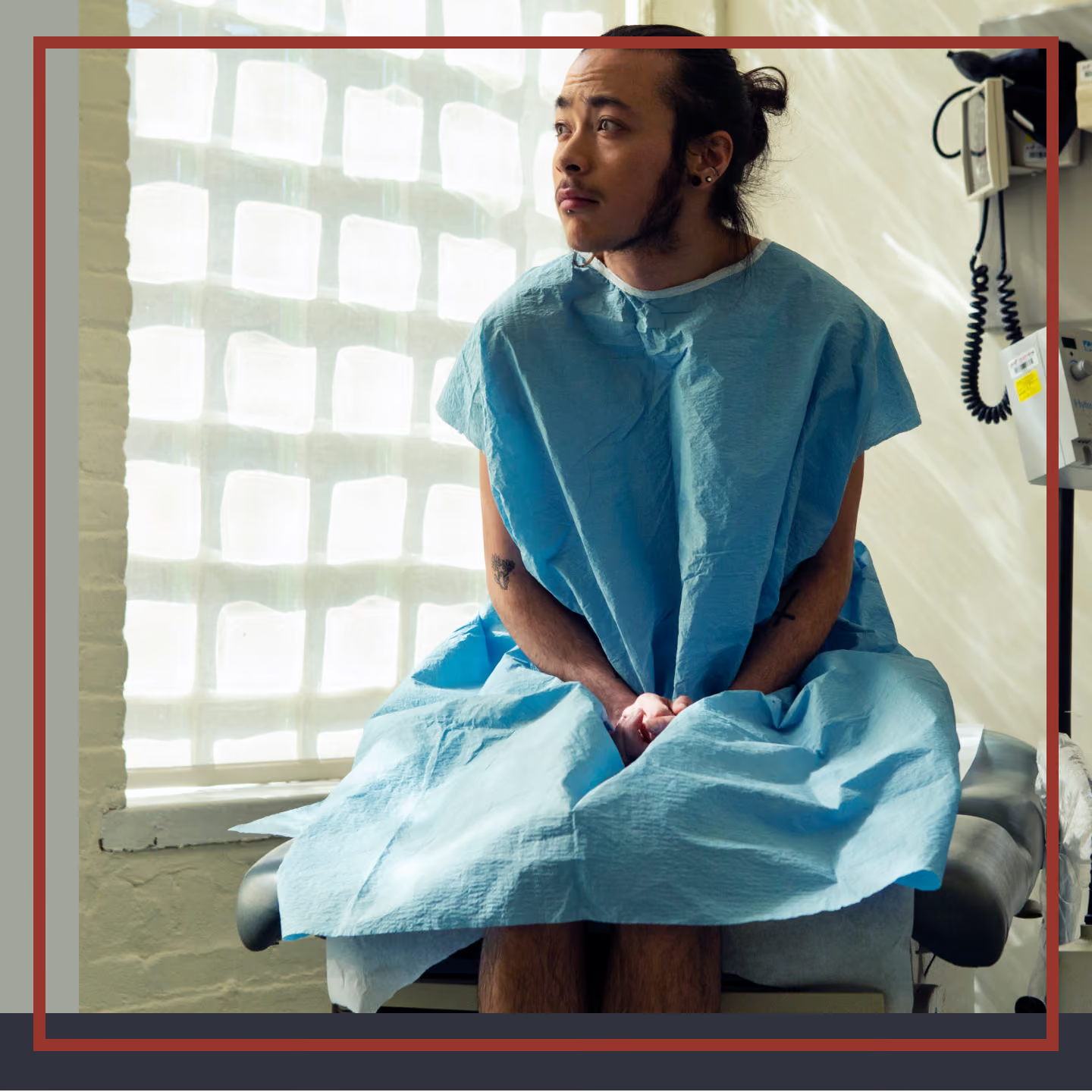
I've been to residential eating disorder treatment for anorexia three times: at 15, 17, and 19. Each time, I lived with a rotating cast of 20 to 50 other patients for several months in what felt like a mix between a bizarre extended sleepaway camp and a hospital. We played cards, did puzzles, attended group therapy, and ate meals under close supervision.
In this environment, I met and interacted with people I never would have otherwise, and certainly not in such an intimate setting. We relied on each other for much-needed social connection. In fact, we couldn’t escape each other if we wanted to. This brought me a certain level of social confidence that I never experienced in regular life, and my relationships with my peers flourished.
Making friends has never come easily to me. I’m always second-guessing myself, worried that people are talking behind my back and thinking I’m weird, that I’m not following some secret social code I’m unaware of. I always had a solid group of friends through elementary and middle school. But by ninth grade, my friends from eighth grade had either moved away or ended up in different classes, leaving me isolated. It wasn't that I couldn't make friends, but I lacked the confidence to put myself out there. In this loneliness, my eating disorder thrived.
In treatment, however, I became gregarious and sociable. I didn’t fade into the background. In treatment, I never felt silenced, afraid to say the wrong thing—I couldn’t shut up if I wanted to. I did say the wrong thing sometimes, and I apologized. This bizarre microcosm of society, with its odd social stakes, broke down all my walls. The structured-down-to-the-minute schedules and seemingly arbitrary rules meant I wasn’t guessing or second-guessing social norms. They were clear and enforced.
In treatment, I learned that social life is less about fitting in and more about showing up.
At treatment, we were all becoming alive again. I remember one assistant mentioned that his favorite part of working at a treatment center was watching people’s personalities come back. We were simultaneously uncomfortable and awkward and so excited to be alive. We related to each other in an ultra-specific way, and we felt shared pain and shared joy on a daily basis.
I often think about my dinners with “Nina,” a married woman in her forties. We were the only two patients who had earned the privilege of eating in a separate room, so we’d sit in a strange little kitchen (which had probably never been cooked in), eating tater tot casserole and green beans and dinner rolls with butter packets, having long conversations about life and recovery. When she left, she wrote me a card: “I appreciate your positivity, enthusiasm, encouraging nature...Thanks for being you.” It was a simple gesture, but it meant so much to me—the idea that just being myself was enough for a friendship, that I didn't have to pretend to be someone cooler, more stylish, and funnier.
Of course, there was social tension. When you put so many emotionally vulnerable people together in such a competitive and controlled setting, conflict is unavoidable. I once wrote a fraught journal entry detailing my overdramatic displeasure with people who didn’t want to go outside or play cards. A few pages later, I expressed heartfelt thanks to everyone I had met at treatment, even those I had apparently been so enraged with just a few days before. We loved each other, hated each other, and couldn’t live without each other. And for the first time in my life, I was not hovering on the edge, afraid to make a mistake. I was in the midst of it all.
I met so many fascinating people: “Ryan,” a little boy who loved lizards and perfected his hair gel every morning; “Susan,” a woman in her sixties who taught us the joy of writing letters and hand-washing dishes; “Jane,” my quiet roommate who had four sisters, wise beyond her years; “Ella,” from Maine, smart and funny with a perfect pixie cut and dreams of becoming a farmer; and so many more.
In our social media-driven world, it's easy to see people only in their best moments, and think they aren’t struggling. But at treatment, we were all struggling, plain as day. We saw each other in our hardest moments, becoming our worst and best selves. None of us were perfect, or we wouldn’t have been there. I witnessed people I would have assumed were perfect in any other setting cry, lie, and become their most vulnerable selves.
In treatment, I learned that social life is less about fitting in and more about showing up, being present, and being authentic. The friendships I formed were built on a strong foundation of mutual understanding and vulnerability.
Emotions were high, and we couldn't avoid causing each other pain. We became briefly and intensely enraged with each other, and just as dramatically made amends. The mantra “focus on your own recovery” was hurled like an insult, indicating you were perhaps a little too preoccupied (read: obsessed) with someone else. It hurt, often and sharply. I made mistakes, and I was painfully embarrassed. I sometimes hurt other people, and that was horrible. But these moments of strife ultimately made our connections stronger, deeper, better.
This environment also forced me to stick out developing friendships with people I probably wouldn’t have otherwise. At first impression, I would think some people “weren’t for me,” but after living with them 24 hours a day for weeks on end, I realized that I had so often miscalculated. I first went to treatment soon after the 2016 election, and it was the first time I encountered someone publicly expressing very different political views than my own. I was shocked at first, but it didn’t change my view of that person. I knew that they felt pain in the same way I did, even if our politics didn’t align. There is always more to people's stories than meets the eye, and first impressions are never entirely accurate.
If I'm being honest, the only reason I transformed during treatment was because I had no other choice. But the payoff was surprisingly beautiful. When I left treatment, I carried with me a newfound confidence. I had navigated the strange social dynamics of a treatment center more adeptly than I could possibly have imagined, and it gave me a taste of what social life could be. The lessons I learned continue to shape my interactions to this day.
In the end, what I learned about social life in eating disorder treatment is a universal truth: that genuine connections are formed through shared struggle and mutual support, through accepting each other's flaws and loving each other despite—and because of—it all.