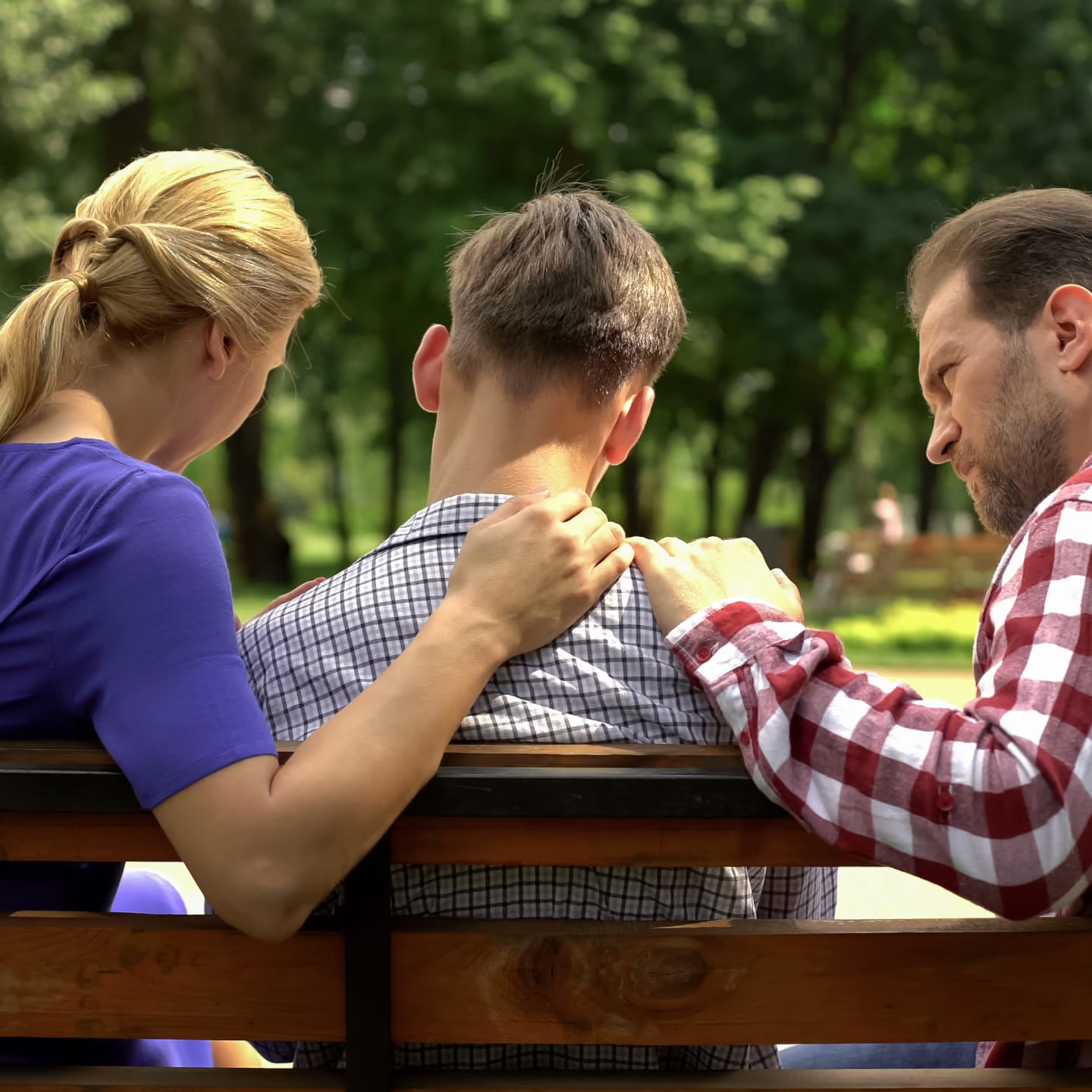

Photo by Andres Ayrton on Pexels.com|Photo by Anna Shvets on Pexels.com||Photo by Marlene Leppänen on Pexels.com
Photo by Andres Ayrton on Pexels.com|Photo by Anna Shvets on Pexels.com||Photo by Marlene Leppänen on Pexels.com
My Dad Says He Might Take His Own Life. I'm Okay With That.
Content warning: This story discusses suicide and suicidal ideation.
When I was 17, I received an email from my dad. There was no text or subject line, only an attached Word doc titled "How the World Looks to Me." I curiously opened it, unsure of what to expect.
It was a three-page suicide letter.
In my shock, I remember thinking how funny it was that the modern age had transformed the suicide letter into the suicide email attachment. It wasn’t the traditional suicide letter/email attachment, in the sense that it didn’t say “I’m going to kill myself now; by the time you read this it will be too late.” It was more along the lines of “I have felt very, very sad all my life, I’ve tried everything to fix it, and nothing has worked – I will kill myself sometime soon.”
As you can imagine, this was quite a surprise. I didn’t even know he was depressed.
I realize now that my dad had avoided talking about his depression to try and protect me from how awful and scary it all was. Unfortunately, as is often the result of bottling up emotions, his feelings instead exploded — via Gmail. So I had no idea, and I was still in that peculiar stage where you think your parents are superheroes and immune to any maladies.
I was wrong. His letter explained that he wanted to die because he couldn’t stand to be alive anymore. He had been very depressed for a long time, and for decades he’d tried various therapies to help. He’d dutifully experimented with SSRIs. He’d tried counseling, silent retreats, late-night Samaritans calls, creative therapies, men’s groups, psychologists. Nothing worked.
I began to type a reply.
I had a lot of ideas in my young head. I most wanted to get across that I loved him, and I was sorry he was in pain. As I wrote out my response, it became obvious that if I really did love him, and he really had tried everything, then maybe suicide was logical to think about.
I love and respect him, so when he said the pain was unbearable, I trusted him.
Although it felt wrong to say, I was overwhelmed by the selfishness inherent in asking him to continue living just because I didn’t want him to die. The reality of the human condition is that we never know what someone else is experiencing. I couldn’t know how he felt; I still can’t. But I love and respect him, so when he said the pain was unbearable, I trusted him. What kind of daughter would I be to ask him to live that way? I love my dad, and the idea of him enduring this drawn-out agony was unimaginable.
So I told him that because I love him, I’m alright if he chooses to kill himself. I said emphatically that I hoped he wouldn’t, but I also said that if the pain is as bad as he described, I gave my blessing to his suicide.
My dad did not kill himself. Soon after he sent that email, we had a big family heart-to-heart. There was all the crying and hugging you’d expect, but also a kind of calm, bleak understanding. He told me that his mental health always has been, and will likely continue to be, very up and down. He said that for now he will continue to live, but in the future he might still decide to kill himself.
Since then, I have worked extensively in mental health services. I’ve worked for women’s charities focused on wellbeing; I’ve worked as a Samaritan; I’m a mental health first-aider; and I’ve attended countless courses and seminars. As a result, I have no fewer than three suicide awareness certificates.
Absolutely stunning work is done in these places. The people I’ve met there have unparalleled levels of willpower and passion. They all seem to have the same relentless cheeriness that nurses so famously emulate. But they do not like the idea that suicide could be the answer. Every time suicide is brought up, the immediate, unflinching reaction is the same: How do we stop it? Who do we call to get them help? What safeguarding procedure do we follow?
I, in response, slither further down in my seat.
I still agree with what I wrote in that email. I think that sometimes—in very specific cases—suicide can be the answer. I have never, ever said this in the context of my work. I’ve never brought it up in training sessions. I’ve never said this to any service users of the charities I work with. But I still think it sometimes.
I think the belief that we should always prevent suicide stems from the theory that everyone can be fixed. (Whatever “fixed” means.) That everyone can be made happy and healthy. This is a lovely idea—I just don’t think it’s true. Our current approaches to suicide conceal the reality that some illnesses aren’t curable. This is becoming more accepted with visibly physical diseases. Assisted suicide is becoming gradually more accepted with terminal cancer cases, yet there are no whispers of applying this to mental health illnesses. Why not?
I guess when someone has terminal cancer, a doctor can say with some certainty whether the patient will or won’t get better. With mental health, however, everything is more ambiguous. No one can say if someone with depression will improve or not – and maybe that’s why no one suggests that suicide could be an answer. Maybe it’s because we all feel awkward talking about death. Or because considering suicide seems too morbid.
I don’t know what to do about this, but I do know that there’s people like my dad suffering in a big, long-term way because no one ever tells them that it’s okay to let go – that it’s their decision to make. Ten years later, my dad is still alive and his mental health is as topsy-turvy as ever. I’m so glad he decided to keep living after he sent that email. But if he ever does decide to kill himself, I will try my absolute best to accept his decision.